
Key Takeaways
- Hiring a landscaper for a retaining wall is primarily about safety, drainage, and long-term stability—not just aesthetics
- A professional will assess soil conditions, slope grade, and local codes before recommending gravity, cantilever, or segmental retaining walls
- The typical homeowner experience includes on-site consultation, design proposal with drawings and quote, permitting, installation, and cleanup over 3–10 days for most residential projects
- Budget ranges vary significantly between small garden walls and engineered 6–8 ft structures, with materials like timber, concrete block, and natural stone affecting both cost and lifespan
- Proper drainage and permits are the two areas where professional landscapers add the most value and reduce long-term risk
What a Retaining Wall Does (and Why You Need a Pro)
A retaining wall is a rigid structure designed to hold back soil on a slope, protecting your yard, foundation, and driveway from erosion and potential collapse. When that bank behind your house starts creeping downward after every heavy rain, you’re watching the exact problem these walls are built to solve.
But here’s what most homeowners don’t realize: landscapers aren’t just looking at how the wall will appear when finished. They’re evaluating lateral earth pressure, groundwater movement, and freeze-thaw cycles to determine whether a wall can even be built safely without engineering involvement.
Consider this real-world scenario: terracing a backyard in 2024 with a 20–30% slope to create flat lawn and patio areas while preventing washouts after heavy rain. The homeowner might see “build a wall,” but the landscaper sees excavation depth, base material requirements, and drainage systems that will determine whether that wall stands for decades or fails within a few seasons.
Once a wall exceeds a certain height—often 4 feet (1.2 m) depending on local code—many municipalities require engineering and permits, which landscapers help coordinate.
Here’s why professional input matters:
- Soil assessment – Different soil types (clay, sand, organic fill) behave differently under pressure
- Ground stability – The slope behind the wall affects how much lateral pressure the structure must resist
- Drainage planning – Water is the primary cause of wall failure; pros plan for it from day one
- Code compliance – Building without required permits can result in fines or forced removal
- DIY failure risk – Improperly built walls can lean, bulge, or collapse entirely within a few years
How Hiring a Landscaper for a Retaining Wall Actually Works
The journey from “I think I need a wall” to a finished structure follows a fairly predictable path. Understanding this timeline helps you set realistic expectations and ask better questions during the process.
Initial Contact
Most projects start with a phone call or online inquiry. You’ll share photos, rough measurements, and describe the problem—maybe the bank has been eroding since heavy storms in 2023, or water keeps pooling along your fence line. A good landscaper will ask clarifying questions before scheduling an on-site visit.
On-Site Consultation
This is where the real assessment happens. Your landscaper will check:
- Soil type and existing drainage patterns
- Property lines and potential utility conflicts
- Elevation changes using a level or laser
- Access points for equipment like mini-excavators or skid steers
- Proximity to structures, driveways, and trees
Design Phase
Based on the site assessment, the landscaper creates sketches or 2D/3D renderings showing wall alignment, height, any steps or terraces, planting beds, and material options. This is when you’ll discuss choices between timber, SRW block, natural stone, or poured concrete.
Estimate and Contract
A professional quote should include clear line items:
Category | What’s Included |
|---|---|
Demolition | Removal of existing walls or structures |
Excavation | Digging and grading the site |
Base stone | Crushed rock for the foundation |
Materials | Block, stone, or timber |
Drainage | Perforated pipe and gravel backfill |
Reinforcement | Geogrid for taller walls |
Haul-away | Disposal of excess soil and debris |
Permits | Filing fees if applicable |
Scheduling and Prep
Before work begins, your landscaper will arrange a call to 811 for utility locating, schedule material deliveries of gravel and block, and confirm access for equipment. You’ll receive a start date and estimated project duration.
Types of Retaining Walls Your Landscaper Might Recommend
Professionals match wall type to your specific situation—considering slope severity, soil conditions, available space, and whether the wall is decorative or load-bearing (like holding up a driveway).
Gravity Walls
- How they work: Built from heavy materials like large concrete blocks, natural stone, or gabion baskets filled with rocks
- What they rely on: Their own mass to resist soil pressure
- Best for: Lower walls (typically under 4 ft) where space behind the wall allows for proper batter (backward lean)
Cantilevered Concrete Walls
- How they work: Poured concrete with a footing and steel reinforcement
- What they rely on: The weight of soil on the footing heel combined with structural strength
- Best for: Walls near houses, garages, or where space behind the wall is limited
Segmental Retaining Walls (SRWs)
- How they work: Modular interlocking concrete blocks that stack without mortar
- What they rely on: Friction, setback, and often geogrid reinforcement extending into the soil
- Best for: Most residential walls from 2–8 ft, offering curves, corners, and terracing options
Timber Walls
- How they work: Pressure-treated wood or landscape ties stacked horizontally
- What they rely on: Deadman anchors extending into the hillside
- Best for: Budget-conscious projects, though lifespan is typically 10–20 years before maintenance or replacement
Specialized Systems
For extreme situations, landscapers may recommend:
- Gabion baskets – Wire cages filled with rocks, offering excellent drainage and a natural look
- Mechanically stabilized earth (MSE) – Walls with geogrid layers creating a reinforced soil mass
- Anchored walls – Walls with cables or rods extending deep into stable soil or bedrock
The Role of Drainage, Base, and Engineering (What Pros Obsess Over)
Most retaining wall failures don’t happen because of “bad blocks.” They happen because of poor drainage, insufficient base prep, or missing reinforcement. This is where professional landscapers earn their money.
The Drainage System
Water pressure behind a wall (hydrostatic pressure) can double or triple the forces the structure must resist. Here’s what a proper drainage system includes:
- Perforated drain pipe – Installed behind the wall base, typically 4” diameter
- Clean crushed stone – 3/4” angular gravel surrounding the pipe and filling the space behind the wall
- Landscape fabric – Filter fabric preventing soil from clogging the drainage stone
- Daylighted outlets – Pipes extending to grade where water can exit the system
The Base
The gravel base under your wall is arguably more important than the wall itself:
- Trench excavated below grade (depth varies by wall height and frost line)
- Compacted crushed stone or road base, typically 6–12” deep in freeze-thaw climates
- Level within 1/8” over the length of the wall
- Base material extending beyond the block footprint for stability
Reinforcement
Taller segmental retaining walls require geogrid—synthetic mesh that extends back into the soil mass:
- Installed at specific courses (every 2–3 block rows, typically)
- Extends back 60–100% of the wall height into compacted backfill
- Creates a “reinforced soil mass” that acts as a single structural unit
For walls above code thresholds, supporting structures, or built on poor soil like expansive clay or soft organic fill, an engineer may be required.
What It Feels Like During Construction
Let’s be honest: a retaining wall project brings noise, machinery, and temporary disruption to your yard. But it also brings visible daily progress that makes the inconvenience worthwhile.
Days 1–2: Demolition and Excavation
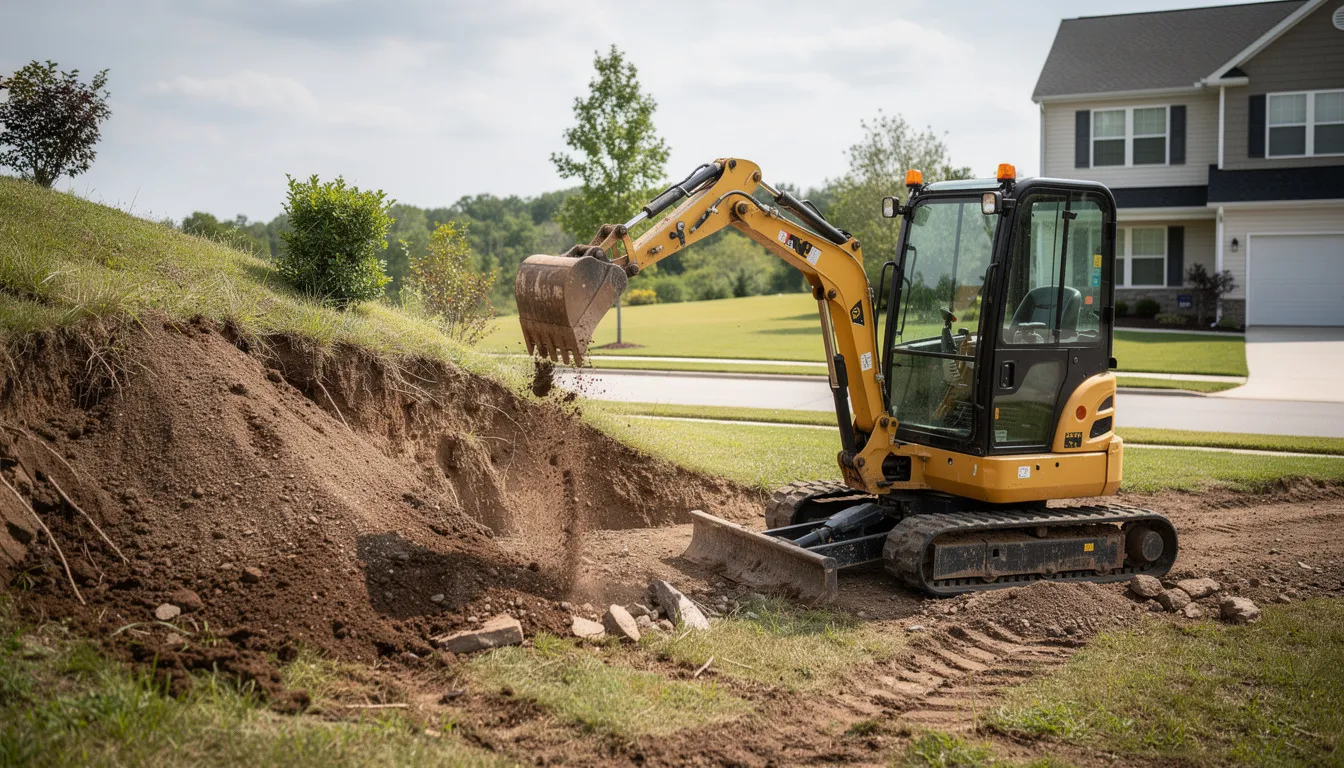
The crew marks the layout with paint and stakes. If there’s an existing failing wall, it comes down. The mini-excavator starts cutting into the hill, loading spoil into a trailer or dump truck. By the end of day two, you’ll see the rough shape of where your new wall will sit.
Mid-Project: Base and Block Installation
This is where precision matters most:
- Base material installed in lifts (layers), each compacted with a plate compactor
- First course of block set perfectly level—this determines everything above it
- Drain pipe installed behind the base course
- Backfill stone placed and compacted as each course rises
- Geogrid installed at specified intervals for reinforced retaining walls
Finishing Touches
The final days involve:
- Installing the cap course (often adhesive-set for a clean edge)
- Final backfilling and compaction behind the wall
- Regrading the upper slope
- Adding topsoil and preparing for sod, seed, or planting beds
Realistic Project Durations
Project Size | Typical Timeline |
|---|---|
Small garden wall (2–3 ft high, 20–30 ft long) | 2–3 days |
Medium wall (3–4 ft high, 40–60 ft long) | 4–6 days |
Tall/engineered wall or multi-terrace system | 5–10 days |
Your landscaper should protect your driveway and walkways where possible, explain temporary material storage, and commit to daily cleanup.
Costs, Quotes, and How Landscapers Help You Stay on Budget
Retaining wall pricing varies significantly based on height, length, site access, and material choice. However, most landscapers can provide ballpark ranges early in the conversation.
General Cost Brackets
- Small decorative walls (2–3 ft high, 20–30 ft long) – Lower cost bracket, often focusing on aesthetics and minor grade changes
- Medium structural walls (3–5 ft high) – Mid-range costs, may require geogrid and more robust drainage
- Tall engineered walls (6+ ft) – Higher costs including engineering fees, permits, and substantial reinforcement
How Material Choice Affects Price and Lifespan
Material | Relative Cost | Expected Lifespan |
|---|---|---|
Pressure-treated timber | Lower | 10–20 years |
Segmental concrete block | Mid-range | 30+ years |
Poured concrete | Mid to higher | 30+ years |
Natural stone | Higher | 30+ years with premium aesthetics |
What a Detailed Quote Should Include
- Demolition of existing walls (if applicable)
- Disposal and haul-away
- Excavation and rough grading
- Base and backfill stone
- Block, stone, or other wall materials
- Drainage pipe and fittings
- Geogrid reinforcement (for taller walls)
- Stairs, railings, or integrated features
- Permit fees
Payment Structures
Most landscapers use milestone-based payment schedules:
- Deposit – Typically 10–30% to secure scheduling and order materials
- Progress payment – Due when materials arrive or base is complete
- Final payment – After walkthrough and completion
Always clarify how change orders work if site conditions differ from expectations (like hitting rock or discovering buried debris).
Choosing the Right Landscaper for Your Retaining Wall
Retaining walls blend landscaping aesthetics with structural engineering. This means vetting your contractor carefully is critical—not every landscaper has experience with walls that must perform structurally.
Key Qualifications to Verify
- State/local contractor license (where required)
- General liability insurance
- Workers’ compensation coverage
- Experience with walls of similar height and complexity
- Familiarity with local permitting requirements
Questions to Ask
- Can I see photos of retaining wall projects you completed in 2022–2024?
- Have you built walls in similar soil conditions and slopes?
- Which block systems do you typically work with?
- Do you follow manufacturer installation guidelines?
- How do you handle drainage behind the wall?
- Will you obtain necessary permits, or is that my responsibility?
Red Flags to Watch For
- Vague estimates without line-item breakdowns
- No written contract
- Reluctance to discuss drainage details
- Dismissing the need for permits on taller walls
- Unwillingness to provide references
- Pressure to sign immediately
A landscaper who gets defensive when you ask technical questions about base depth or drainage is probably not the right fit for a structural project.
Designing a Retaining Wall That Fits Your Landscape
A skilled landscaper treats your wall as part of a broader outdoor living area, not an isolated structure. The design phase is your opportunity to create something that functions perfectly and looks intentional.
Aesthetic Choices
- Block color blends – Many SRW systems offer multiple color combinations in shapes and colors that complement your home
- Stone textures – Options range from smooth contemporary to tumbled old-world finishes
- Cap profiles – Flat, rounded, or natural stone caps change the wall’s visual character
- Material matching – Coordinating with existing patio pavers, concrete pavers, or siding colors
Functional Design Elements
Beyond simply retaining soil, your wall can incorporate:
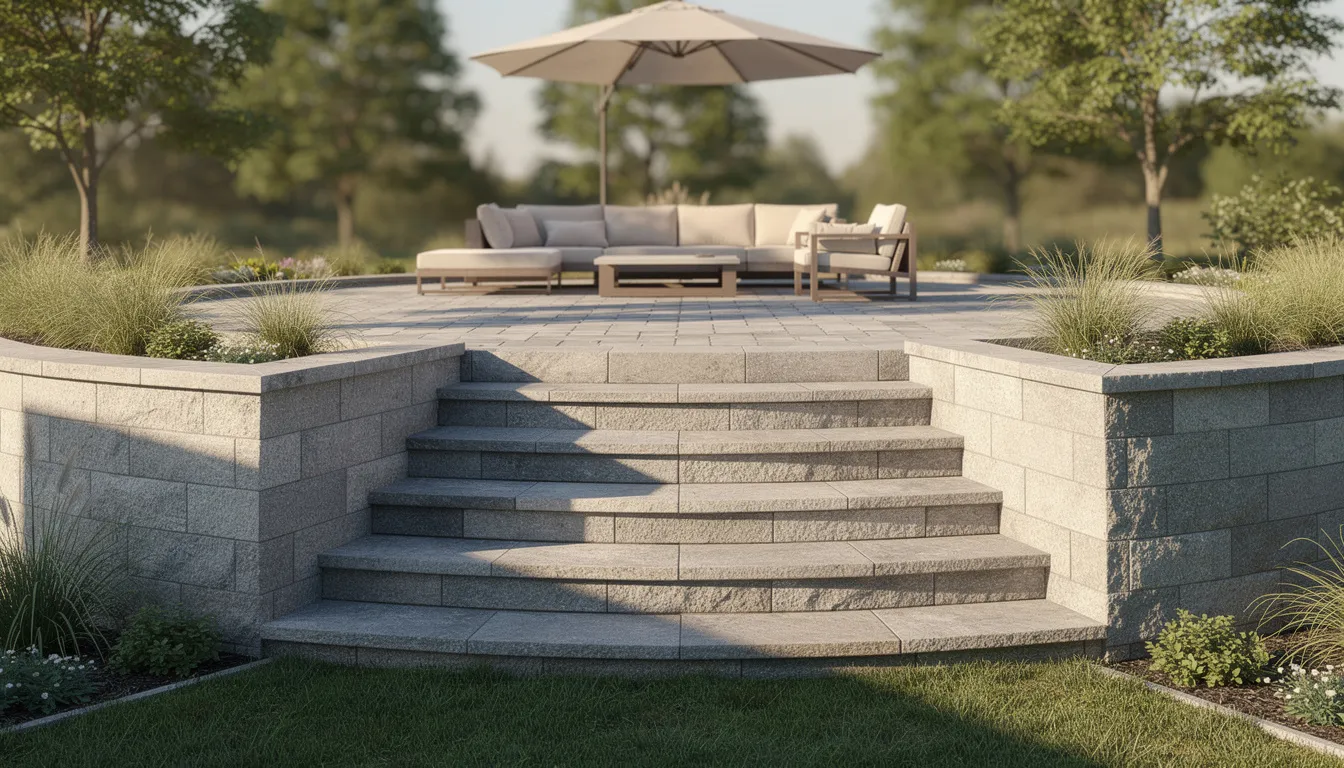
- Integrated steps – Built-in stairs connecting different yard levels
- Tiered walls – Multiple shorter walls creating planting beds and reducing visual height
- Sitting walls – Lower walls along a patio designed for casual seating
- Lighting – Low-voltage fixtures illuminating the wall face or caps
Planning Transitions
Your landscaper should consider how the wall connects to other elements:
- Tying into fences, driveway edges, or deck footings
- Smoothing grade changes for comfortable mowing and walking
- Creating natural flow to walkways and outdoor kitchens
- Integrating with existing permeable pavers or paving stones
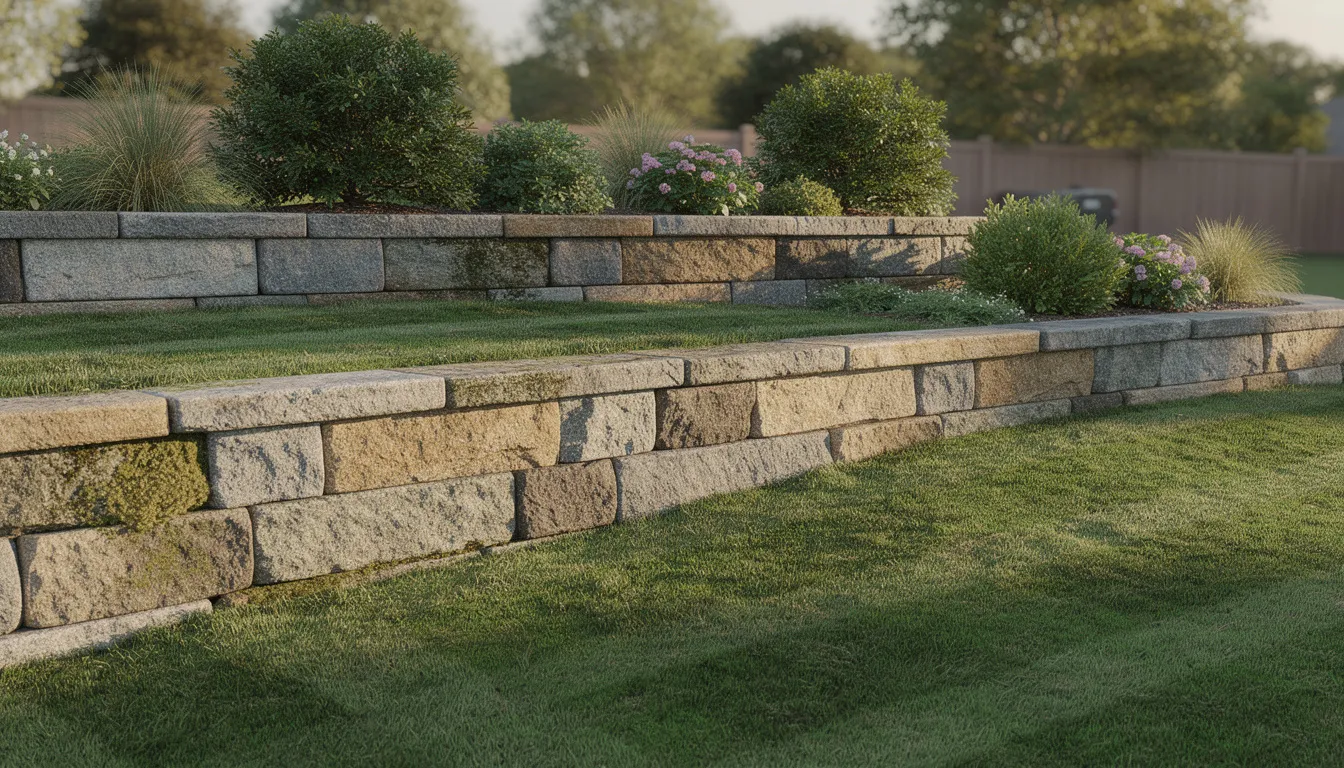
Example from 2024: A homeowner replaced a failing railroad-tie wall with a two-tier SRW system featuring tan block with charcoal accents. The upper tier created space for mixed perennial plantings, while the lower tier wrapped around a new paver patio with space for outdoor living. The result transformed a maintenance headache into the focal point of the backyard.
Maintenance, Lifespan, and Warranties
One of the best things about a well-built retaining wall: it’s largely hands-off once installed. Here’s what realistic expectations look like.
Basic Homeowner Maintenance
- Check drain outlets – Ensure they’re not blocked by mulch, soil, or debris
- Watch for movement – Look for bulging, leaning, or gaps between blocks
- Mind the load – Keep heavy equipment or parked vehicles away from the wall edge unless designed for that use
- Control vegetation – Prevent tree roots from growing into the wall structure
- Address minor issues early – Small settlement or erosion is easier to fix before it worsens
Lifespan Comparison
Wall Type | Expected Lifespan | Notes |
|---|---|---|
Treated timber | 10–20 years | May require replacement or significant repairs |
Segmental block (properly drained) | 30+ years | Minimal maintenance required |
Natural stone (dry-stacked or mortared) | 30+ years | Premium appearance, durable |
Poured concrete | 30+ years | May show visible cracking over time |
Warranty Coverage
- Workmanship warranties – Many landscapers offer 1–5 year coverage on their installation
- Material warranties – Block manufacturers often provide limited lifetime warranties when walls are installed to specification
- What’s typically covered – Structural failure, block defects, drainage system function
- What’s typically not covered – Cosmetic weathering, damage from impacts, issues caused by improper homeowner modifications
Annual or biennial check-ins with your landscaper can catch minor settlement or erosion issues before they become costly repairs.
FAQ
How long does it take to build a residential retaining wall?
Most small garden walls under 3 ft high and 20–30 ft long can be installed in 2–3 working days once materials are on site and weather cooperates. Larger engineered walls or multi-terrace projects typically run 5–10 days depending on access, complexity, and soil conditions. Keep in mind that design, permitting, and scheduling usually add 1–4 weeks ahead of actual construction.
Do I really need a permit for my retaining wall?
Many municipalities require a permit—and sometimes engineer-stamped drawings—once a wall exceeds a certain height, often around 4 ft (1.2 m). Walls supporting driveways, structures, or steep slopes may trigger stricter requirements even at lower heights. Reputable landscapers are familiar with local rules and can help obtain permits or coordinate with an engineer as needed.
Can I build part of the project myself to save money?
Some homeowners handle demolition, planting, or final cleanup themselves to reduce costs. However, critical elements like excavation depth, base prep with a rented plate compactor, proper drainage, and block installation should remain under professional supervision. Mistakes in structural portions often cause wall movement or failure within a few seasons, especially in areas with heavy rain or freeze-thaw cycles. If budget is tight, discuss a hybrid approach with your landscaper while keeping all engineered portions under their responsibility.
What season is best for installing a retaining wall?
Spring through fall is typical construction season, with work pausing during deep freezes or very wet conditions that prevent proper compaction. Late summer and early fall often offer stable weather and can be ideal for pairing wall construction with new plantings while the ground is still workable. Lead times can be longer during peak spring season, so contacting a landscaper a few months in advance is wise planning.
Will a new retaining wall increase my property value?
While exact value gains vary by market and project scope, properly engineered retaining walls can improve usable yard space, resolve drainage problems, and enhance curb appeal—all benefits that buyers notice. Creating flat, functional areas for patio spaces, play areas, or gardens often makes a home feel larger and more practical. Documented permits and professional installation reassure future buyers about safety and longevity, which can be a selling point during negotiations.